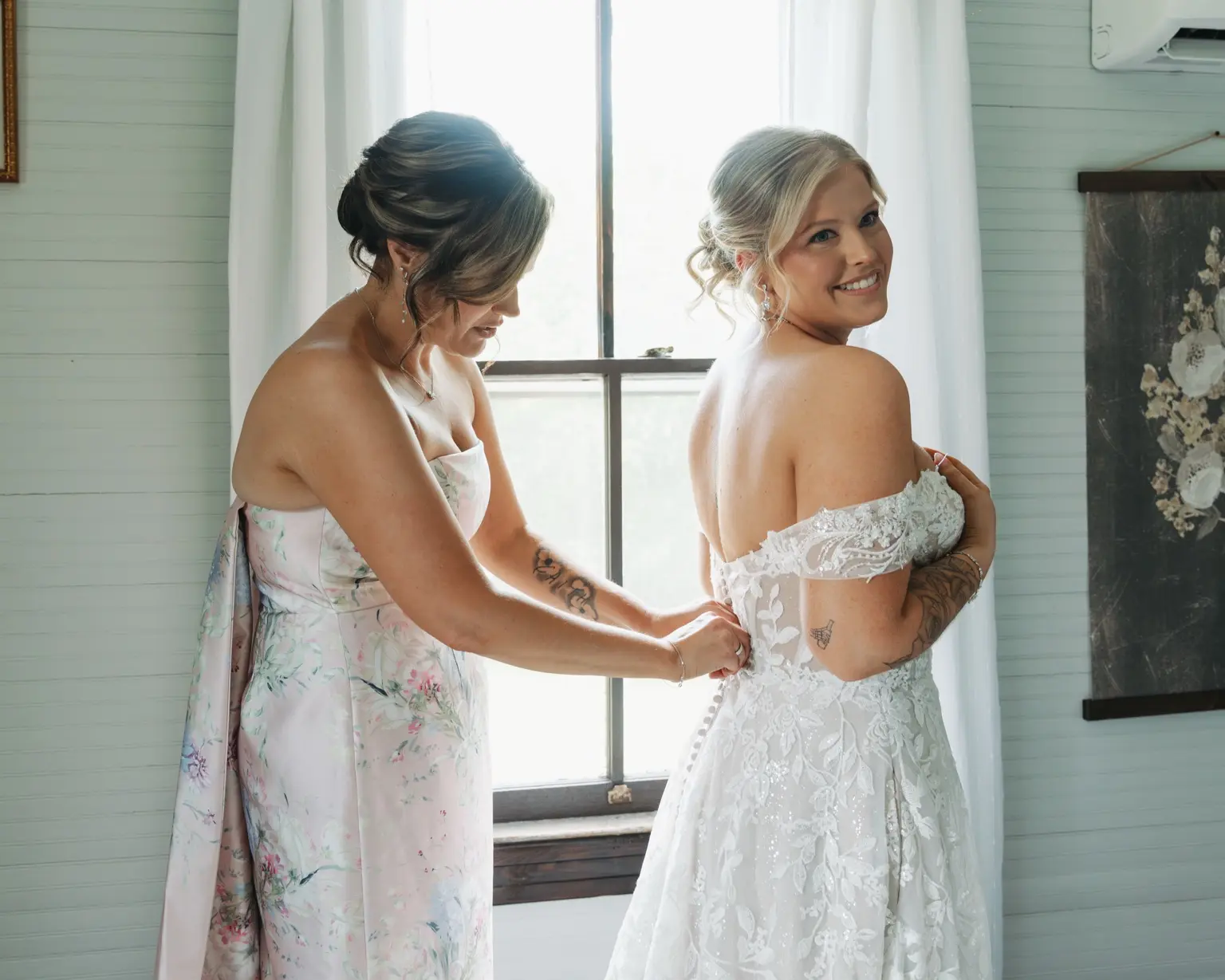
Start with the fixed moments
Write down the parts of the day that cannot move: ceremony time, venue access, transportation, sunset, dinner, and any cultural or religious traditions. Everything else can be placed around those anchors.
Your photography timeline should support the day you want to experience. It works best when it protects a few quiet transitions instead of scheduling every minute.
Give preparation room to unfold
Getting-ready coverage usually includes details, the final stages of hair and makeup, dressing, and time with the people closest to you. A calm room and a little margin create better photographs than a packed list of poses.
- Keep rings, invitations, jewelry, and meaningful details together.
- Choose a room with window light and clear one corner before photography begins.
- Plan for everyone helping you dress to be dressed first.
Decide whether a first look fits
A first look can move couple, wedding party, and some family portraits before the ceremony. That often creates more time to join cocktail hour. A traditional aisle reveal can be equally meaningful; it simply places more portraits after the ceremony.
The right choice depends on your priorities, ceremony time, available light, and how much of cocktail hour you want to attend.
Protect the portrait window
For portraits, twenty focused minutes in good light can matter more than an hour at the wrong time. Your photographer can help identify the best location and build a realistic movement plan between spaces.
Family photographs move quickly when the list is written in advance and one person from each family helps gather people.
Leave margin before the ceremony
A short pause before the ceremony gives everyone time to settle and lets the photography team photograph the room, guests arriving, and the final anticipation. It also absorbs small delays without changing the ceremony.
Plan reception coverage around what matters
If you want the dance floor, schedule enough coverage after the formal events for guests to relax. If private vows, family reactions, or a quiet exit matter more, place the coverage there. A good timeline reflects your priorities rather than a standard checklist.